
Scientific Evidence · Meditation Research
Explore research on how meditation may influence brain activity, emotional well-being, and the way we experience the mind.
Research 01 · Harvard Medical School · 2025 RCT
"I'd spent years searching for something that would actually stick. The first session here, I understood why it hadn't- and what was different."
Study design, 3-arm randomized controlled trial
Psychological improvement within each group — 8 weeks
Across all five measures, the meditation group led consistently. Not one outlier — every measure moved in the same direction, and meditation came first on every one.
Meditation
Yoga
Stress education

Psychological improvement within each group, 8 weeks
Across all five measures, the meditation group led consistently. Not one outlier — every measure moved in the same direction, and meditation came first on every one.
Psychological
Perceived stress, anxiety, depression, wellbeing, and quality of life — measured through internationally validated self-report tools. This is the layer most people expect meditation to affect, and it did.
→ Meditation group showed significant improvements across all five measures
Allostatic load biomarkers
Cortisol, blood pressure, BMI, blood glucose, and cholesterol — the body's physical stress response, measured directly in blood and tissue. This is the layer the mind is too slow to fake.
→ Biological stress markers shifted alongside psychological improvements
Gene expression
Changes in how genes are expressed at the molecular level — not whether genes exist, but whether they are switched on or off. This is the deepest layer of biological change science can currently measure.
→ First direct evidence that meditation reaches down to the DNA level
Measurement timeline
Across all five measures, the meditation group led consistently. Not one outlier, every measure moved in the same direction, and meditation came first on every one.
The 26-week follow-up is what separates this study from most. It confirmed that the improvements were not temporary. Six months after the program ended, participants in the meditation group maintained measurable gains, evidence that the practice creates lasting change, not just a short-term response.
Denninger JW, Joss D, Romero PM, Khalsa SBS, Hoge EA, Bhasin M, Lazar SW et al. · Harvard Medical School / MGH · Frontiers in Psychology, Vol.16 · September 2025 · DOI: 10.3389/fpsyg.2025.1653242
Used with permission — Dr. Sara W. Lazar, Harvard Medical School
Research 02 · Our Own Study · Mental Health Science
Mental Health Scores by Practice Level
Lower score = better mental health (SCL-90 scale)
Level 1–2
Level 3-4
Level 5-6
Level 7
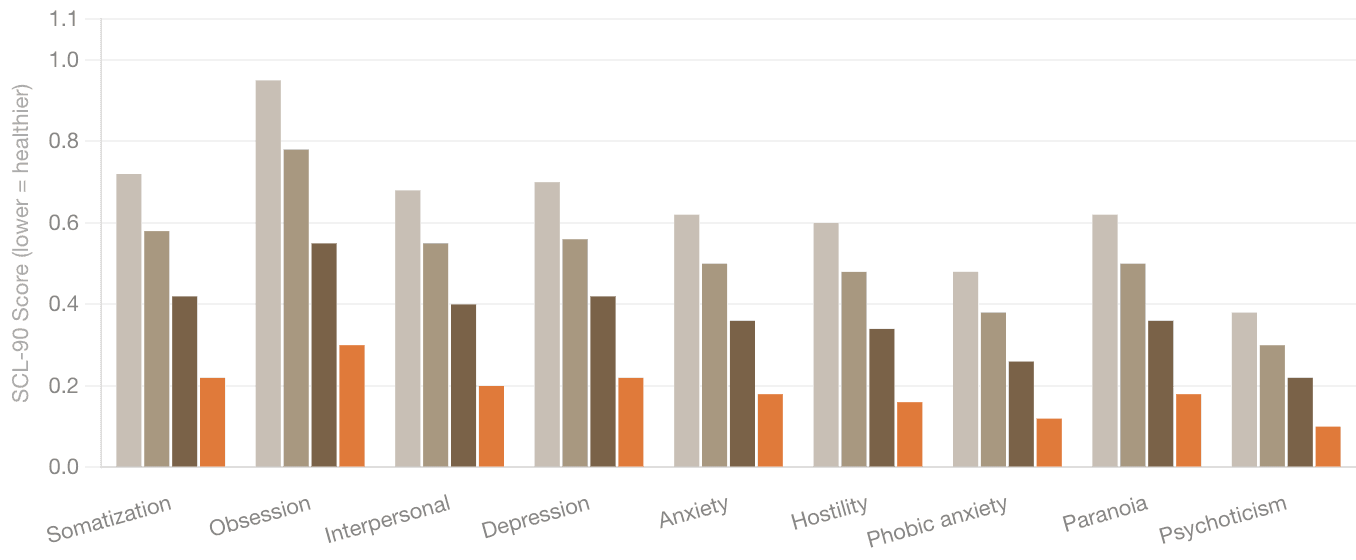
Prof. Lee In-su, Korea National University of Transportation
SCL-90 (Derogatis, 1973 · International Standard)
Journal of Holistic Education, Vol. 4, 2012
One-way ANOVA + Scheffe's post-hoc test · SPSS 14.0
The effect of this meditation levels on mental health
Most meditation studies compare people to themselves — before the program, after the program. This one didn't stop there. Forty-six South Korean breast cancer survivors were randomly assigned to two groups: one practiced this method, the other received standard self-management education.
The meditation group came out ahead on every measure researchers tracked.
46
Participants, stages I–III breast cancer
2
Randomized groups — meditation vs. comparison
4/4
Outcome measures reached statistical significance
2017
Published in Cancer Nursing (peer-reviewed)
All four tracked outcomes moved in the expected direction versus comparison education.
P-value comparison
p=.05 threshold
Depression
p=.034
Anxiety
p=.036
Stress
p=.009
Shorter bar = stronger significance. Quality of life also improved significantly but exact p-value is not confirmed in the study summary.
Outcome
Result
Significance
Depression
Significant decrease vs. comparison group
p=.034
Anxiety
Significant decrease vs. comparison group
p=.036
Perceived Stress
Significant decrease vs. comparison group
p=.009
Quality of Life
Significant increase
Significant
Study Information — Authors: Yun, M.R., Song, M., Jung, K-H., Yu, B.J., & Lee, K.J. (2017). Institutions: Chung-Ang University, Seoul National University, Asan Medical Center. Journal: Cancer Nursing. Design: 2-arm RCT; meditation (n=22) vs. self-management education (n=24).
Research 04 · Neuroscience · Harvard Medical School
It's not just about feeling better. A joint research team from Harvard, MIT, and Yale directly documented structural and functional changes in the brain using MRI — changes that are visible, measurable, and lasting.
Before · Baseline
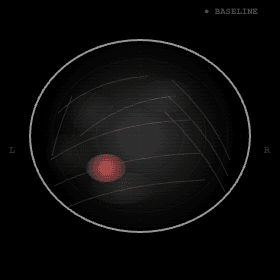
8 WEEKS MBSR
After · Post-MBSR (8 weeks)
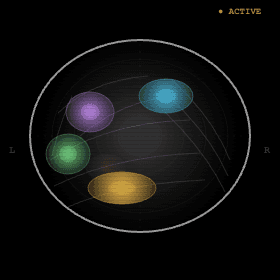
Hippocampus
Memory & learning → gray matter density ↑
Posterior Cingulate Cortex
Self-awareness & mind calming → gray matter ↑
Temporo-parietal Junction
Empathy & compassion → gray matter ↑
Amygdala
Stress & anxiety center → density ↓ (positive change)
* Simulation based on Harvard research data · Hölzel BK, Lazar SW et al. (2011) · Psychiatry Research: Neuroimaging · PMC3004979
EEG Brain Wave Analysis — Before & After Meditation
Electroencephalography · Alpha · Theta · Beta wave analysis · NTNU + Sydney Univ. + Harvard MGH
International EEG Standard
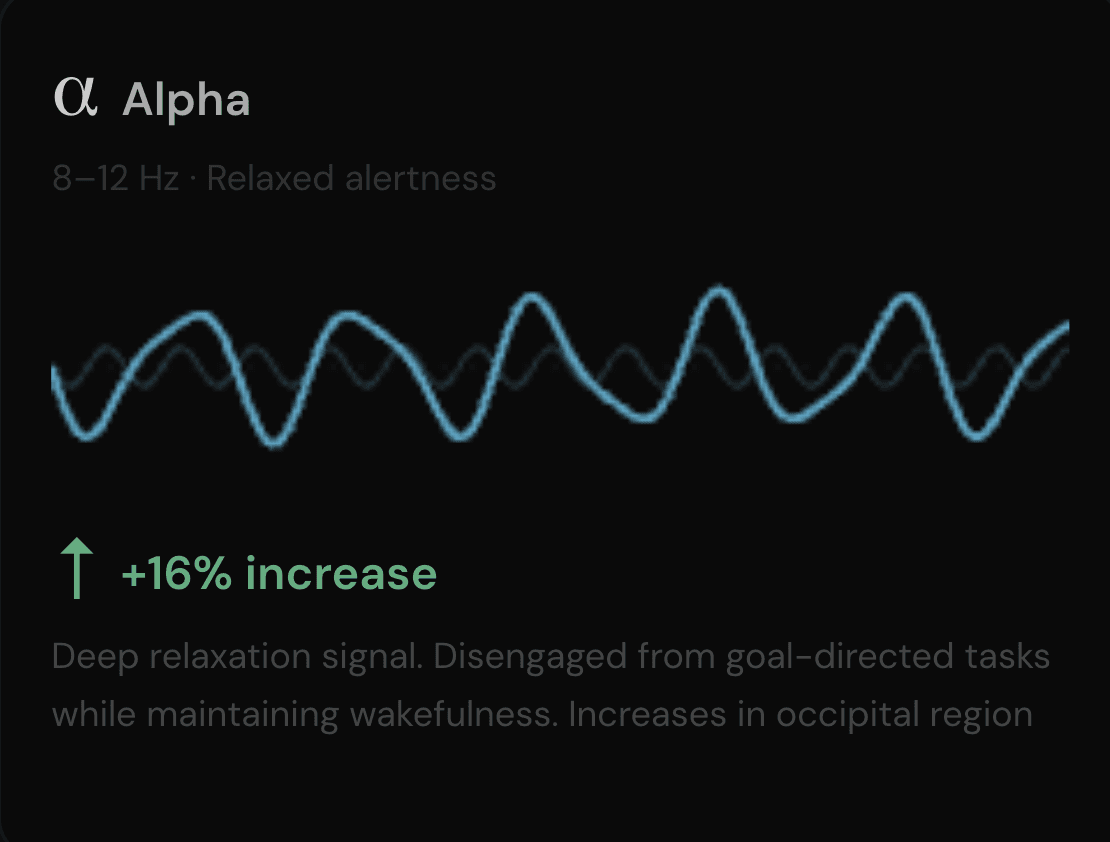
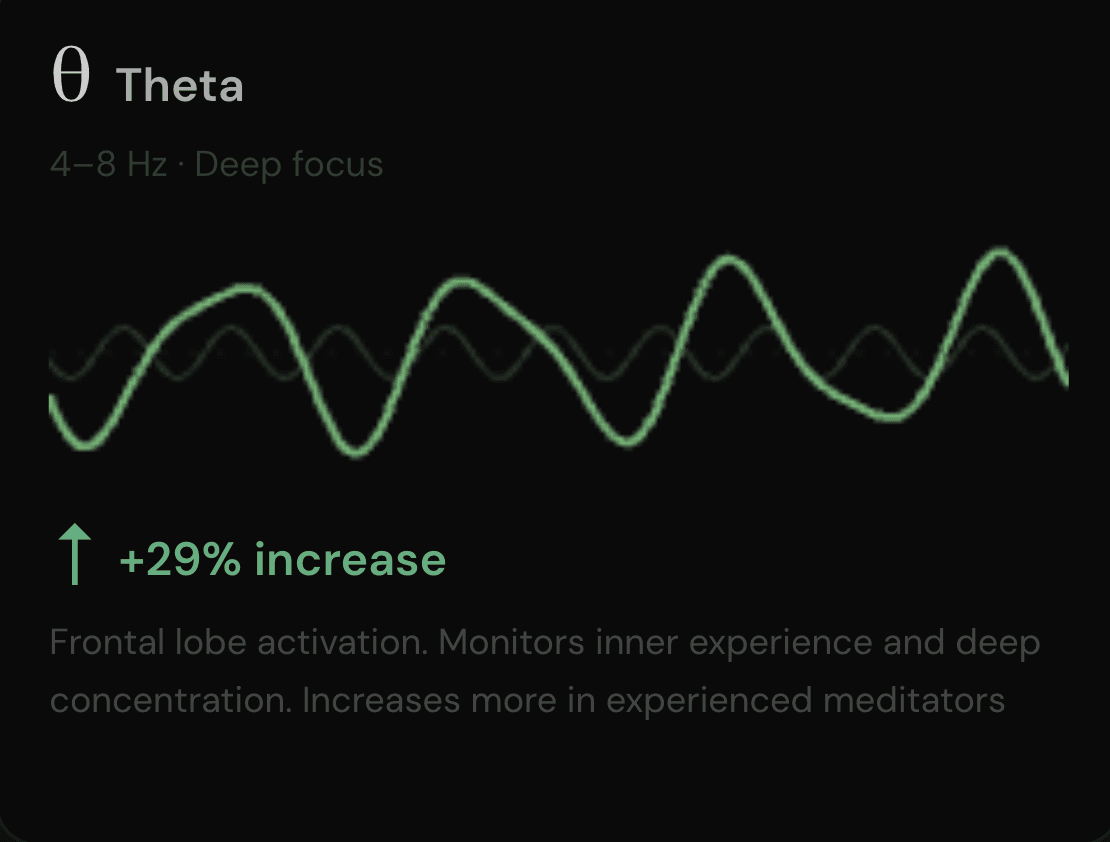
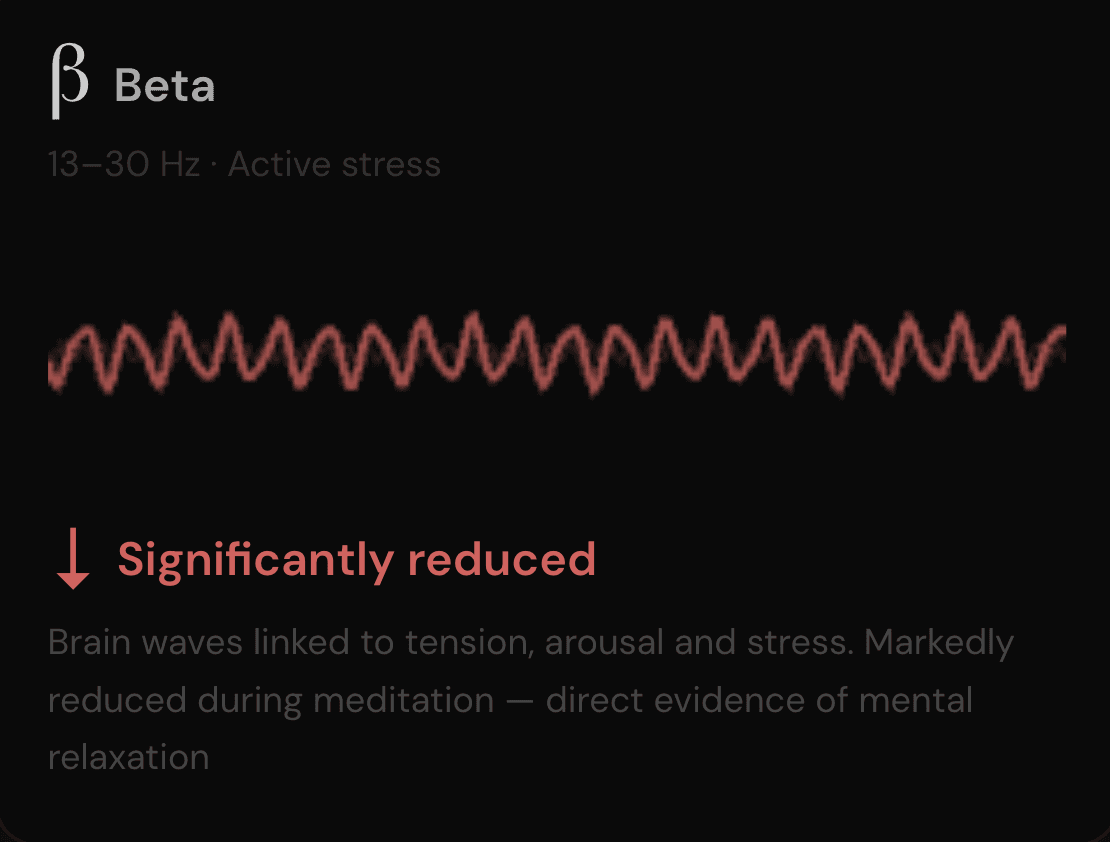
76% probability of brain wave changes beginning within the first minute of meditation
Theta wave changes measured at 10 standard deviations outside normal range
Used with permission — Dr. Sara W. Lazar, Harvard Medical School
Experience the Meditation Science Has Proven
Thousands have already transformed their lives through this Meditation, take your first step today
